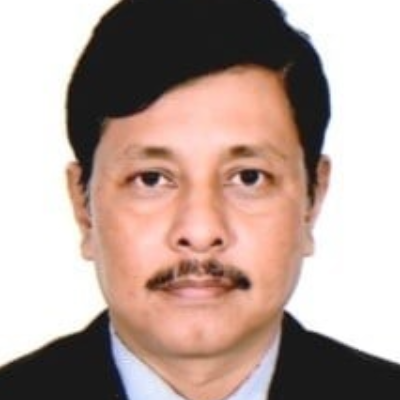
Md. Asaduzzaman Chowdhury, PhD
Professor, Department of Mechanical Engineering, DUET, Gazipur
Professor Dr. Mohammad Asaduzzaman Chowdhury, FIMMM, FRSC, CSci, CChem, CMatP
Full Member, Sigma Xi – The Scientific Research Honor Society, USA
Judge, QS Reimagine Education Awards 2026
Professor Dr. Mohammad Asaduzzaman Chowdhury is an internationally distinguished scientist in Advanced Materials Science and Engineering, whose research has profoundly advanced the fields of 2D nanomaterials, layered ceramics (MAX phases and MXenes), surface engineering, tribology, and energy storage technologies. With over 25 years of academic and research experience, he has pioneered groundbreaking studies on graphene, borophene, semiconductor nanostructures, and hybrid functional composites, with a particular focus on thin-film coatings, electrochemical performance, tribological interfaces, and bandgap engineering.
His seminal contributions include the development of self-generated boron-based MAX phase ceramics, electrochemical exfoliation for large-bandgap graphene, and high-performance layered coatings, enabling significant improvements in lithium- and magnesium-ion batteries, hydrogen storage catalysts, and next-generation protective materials. He has authored over 250 peer-reviewed publications, accumulating more than 8,800 citations with an h-index of 47, reflecting the substantial global impact of his work.
Professor Chowdhury’s scholarly excellence is consistently recognized through his inclusion in the Stanford–Elsevier Top 2% Scientists Worldwide ranking for four consecutive years (2022–2025), placing him among the most influential researchers in mechanical engineering, materials science, and transportation.
He holds several of the highest international professional designations, including:
# Fellow of the Institute of Materials, Minerals and Mining (FIMMM), UK
# Fellow of the Royal Society of Chemistry (FRSC), UK
# Chartered Scientist (CSci) – Science Council, UK (through RSC)
# Chartered Chemist (CChem) – Royal Society of Chemistry, UK
# Certified Materials Professional (CMatP) – Materials Australia
# Full Member of Sigma Xi, The Scientific Research Honor Society, USA
Global Academic Ranking and Award Leadership
Professor Chowdhury has been appointed as a Judge for the QS Reimagine Education Awards 2026, an international competition recognizing innovation in teaching, learning, and employability. He is an invited contributor to the Times Higher Education (THE) Academic Reputation Survey and a repeated invited participant in the QS Global Academic Survey (2021–2026), actively contributing to the QS World University Rankings and THE World University Rankings through institutional and research excellence evaluation.
Keynote and Invited Speaker Engagements
He has delivered keynote addresses at major international forums, including the International Aluminium-Themed Engineering and Natural Sciences Conference (IATENS’19) in Konya, Turkey. He has also been an invited speaker at the 7th International Conference on Mechanical Engineering and Renewable Energy (ICMERE 2023) in Chattogram, Bangladesh.
ASME Conference Leadership and Participation
Professor Chowdhury has attended the ASME International Mechanical Engineering Congress and Exposition (IMECE 2018) in Pittsburgh, USA, and the ASME Energy Sustainability Conference (ES2025) in Colorado, USA. He served as a Technical Session Chair at the ASME Energy Sustainability Conference 2025 (Session 14: Carbon Capture & Cleaner Fossil Fuel Technologies) , and also chaired technical sessions at the International Conference on Mechanical Engineering (ICME 2020) in Bangladesh.
Malaysian Conference Participation
He was invited to physically present three research papers at the 2nd International Manufacturing Engineering Conference (iMEC 2015) , organized by Universiti Malaysia Pahang in Kuala Lumpur, Malaysia, contributing to research in friction properties, wear characteristics, and thin film deposition.
Design and Fabrication of Advanced Test Rigs
Demonstrating exceptional experimental innovation, Professor Chowdhury has designed and fabricated over fifteen specialized test rigs and laboratory equipment, including: a Pin-on-Disc Tribometer, Multi-Axis Vibration-Varied Pin-on-Disc Tribometer, Linear Tribometer, Chemical Vapor Deposition (CVD) Unit, Erosion Test Rig, Physical Vapor Deposition (PVD) Unit, Gear Test Rig, Bearing Test Rig, Fatigue Test Rig, Pump Test Rig, Microbial Fuel Cell, Electrochemical Exfoliation Unit, Electrospinning Unit, and a Planetary Ball Mill. These in-house developments have enabled cutting-edge research at significantly reduced costs.
Editorial and Guest Editorial Leadership
He serves as Editorial Board Member of Scientific Reports (Nature Portfolio) and PLOS ONE (Academic Editor), and holds editorial board positions at Industrial Lubrication and Tribology (Emerald), Tribology in Industry, Energy Exploration & Exploitation (SAGE), and others. He has served as Lead Guest Editor for special issues in Sustainability (MDPI), Advances in Fuzzy Systems (Wiley), and Journal of Biomaterials and Applied Functional Materials (SAGE). He is also a Founding Editorial Board Member of Scientific Reviews (Nature Portfolio, 2026–present).
Research Recognition and Professional Service
His research has been featured in the Nature Index and recognized by the World Health Organization (WHO) . He is a registered expert reviewer for the European Commission (Horizon Europe) and the U.S. National Science Foundation (NSF) , and has served as an international expert reviewer for FONDECYT Initiation Research Grants (Chile).
Mentorship and Academic Supervision
A passionate mentor and educator, Professor Chowdhury has successfully supervised 5 PhD scholars and has awarded 44 MSc / M.Engg. degrees, with many of his former students now holding prominent positions in biomedical materials, clean energy systems, computational materials design, semiconductor development, and industrial nanotechnology. He has authored and edited several widely referenced academic books and chapters.
Professor Chowdhury continues to expand the scientific frontier, contributing transformative knowledge that unites fundamental materials physics, practical engineering solutions, and sustainable technological development for global benefit.